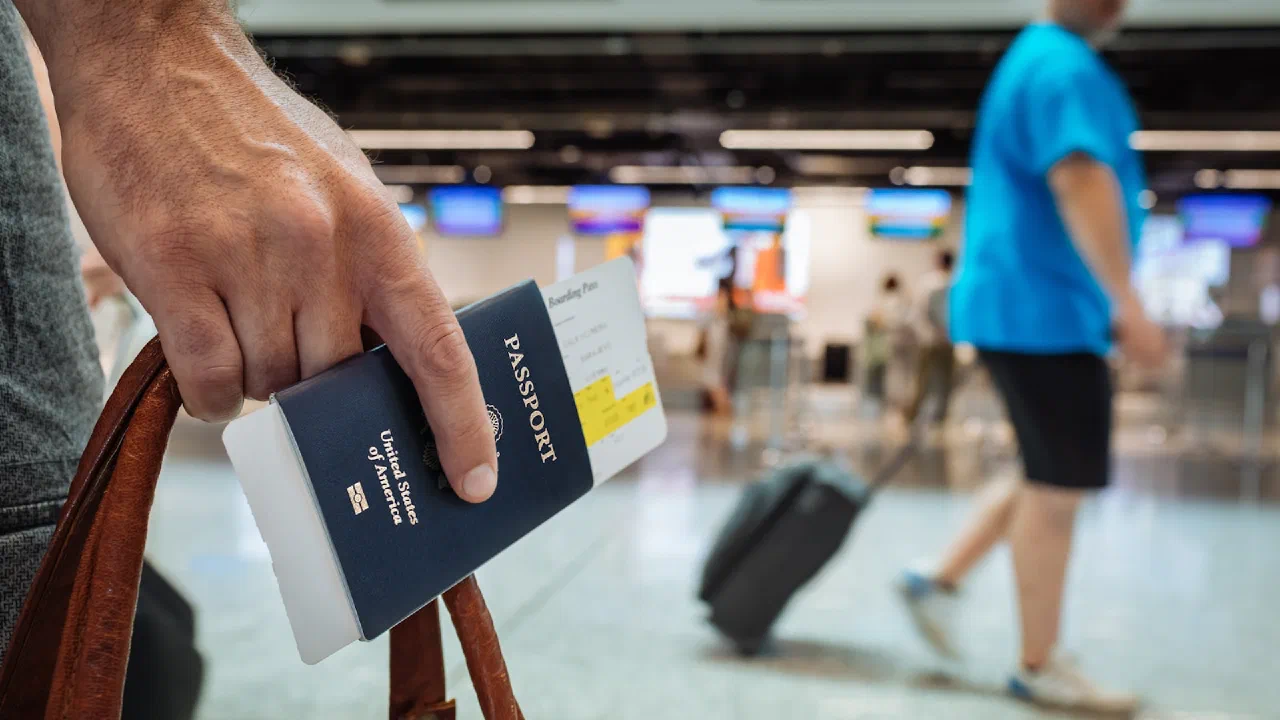
Buy the policy before you fly, make it cover the whole stay including the day you land and the day you leave, and carry it in English. That is the entire requirement, and the penalty for getting it wrong is not a fine — it is being refused entry at the counter with your bag already on the belt.
This applies to every entry, not just your first one. If you leave for a weekend in Yerevan and come back, that is an entry, and your policy has to be live for it.
What the rule is
From 1 January 2026, foreign visitors entering Georgia must hold valid health and accident insurance covering the entire duration of the stay. The two minimums, as reported by Georgia Today on 9 December 2025:
| Cover | Minimum |
|---|---|
| Emergency outpatient care | GEL 5,000 |
| Hospitalisation / inpatient treatment | GEL 30,000 |
Almost every page you will find quotes only the 30,000. There are two numbers, and a policy with a generous inpatient limit and no outpatient line is a policy that meets half the rule.
The insurance may be issued by a Georgian or a foreign insurer. It must cover the entire stay, including the arrival and departure dates. It is accepted in physical or electronic form, in Georgian or English. Diplomatic and official passport holders, accredited diplomatic staff, and people covered by international treaties are among the exempt categories.
Checked on 2 September 2026.
What actually happens at the border
Border officials may ask for the document at entry, by air, land or sea. The consequence of not producing one is denial of entry.
As of the December 2025 reporting there was no publicly announced fixed fine for arriving without cover — which sounds lenient and is not. A fine is something you pay and walk past. A refusal is a flight home at your own cost. Treat the absence of a fine as the opposite of reassuring.
Whether you are asked appears to vary. That is not a rule you can plan around; it is a probability, and the cost of losing that bet is the whole trip.
What counts, in practice
Read your policy for these five things specifically. Most travel policies sold in Europe and North America already satisfy them; the failures are almost always structural rather than about the numbers.
Both limits, named. An outpatient emergency limit of at least GEL 5,000 and an inpatient limit of at least GEL 30,000. Your policy will quote its limits in euros, dollars or pounds. Convert at the National Bank of Georgia’s published rate for the day you check, and leave yourself margin — a policy sitting within a few percent of the line is a policy that fails when the lari moves.
Georgia in the territory. Some regional policies define their territory in a way that either includes or excludes the Caucasus without saying “Georgia” anywhere. If the word is not there, find the schedule that lists it.
The full stay, both ends. A policy that starts on the day you land and ends the day before your flight out does not cover the departure date. That is a rule as written.
A document, not an app screen. A PDF is fine. A logged-in account page that needs a network connection to render is a bad plan at a land border.
English or Georgian. A certificate in a third language, however valid the cover, is not a document the officer at the window can read.
The long-stay problem nobody flags
Here is where this gets awkward, and it is the part the tourism-oriented pages have no reason to mention.
Travel insurance is priced for trips, and you are not taking a trip. A single-trip policy priced for two weeks does not extend gracefully to eleven months. An annual multi-trip policy usually caps any one trip at 31, 45 or 90 days — which means it covers your arrival and quietly stops covering you somewhere around month two, while still looking like a valid annual policy in your inbox. Read the maximum trip duration clause before you read the limits.
For a year-long stay you are generally looking at either a long-stay travel policy written for the duration or a Georgian-issued policy bought locally. Both exist. Which is cheaper depends on your age and passport in ways this post cannot usefully generalise, and I am not naming a product I have no basis to recommend.
And the insurance the border wants is not the insurance a residence permit wants. They are different products with different tests, and buying one does not discharge the other. That is confusing enough to deserve its own post: the insurance your permit needs vs. the insurance the border needs.
If you are already at the airport without one
I have not had to do this, so treat the following as reasoning from the rule rather than as an account of a queue I stood in.
The rule is a document requirement, not a payment you settle on arrival, and there is no publicly announced counter selling compliance at the border. What that means practically is that the fix, if there is one, is buying a policy on your phone before you reach the officer — which is possible with signal, an airport with working Wi-Fi and an insurer that issues instantly, and impossible at a land crossing at eleven at night.
So the failure is asymmetric in an unusually brutal way. Fifteen minutes of preparation at home removes the problem entirely. Fifteen minutes at the border may not, and the fallback is a flight you pay for twice.
If you are travelling with someone, check both policies. Family cover often names the policyholder in a way that leaves a travelling partner formally uncovered, and the border is not the place to discover the distinction.
Where this fits in the wider sequence
The insurance is step zero. Everything else here — the year, the permit grounds, the right to work — happens after you are through the door, and none of it helps you at the door. That ordering is the whole argument of the routes ranked by what they cost: the two mistakes that are genuinely unrecoverable in this system are arriving without cover and working before the permit, and both of them are cheap to avoid and expensive to fix.
The counterpart mistake, once you are in, is miscounting the year. Different failure, same shape: a date you did not write down.
What I do now
I bought a policy before a re-entry in 2026 and had the PDF open on my phone and printed in the folder, because a land crossing is exactly where a phone has no signal. Nobody asked for it on that crossing. I would buy it again the same way — the asymmetry is absurd. The policy costs less than a night in a Tbilisi hotel; the failure costs a flight.
The checklist, then:
- Buy before you fly, not on arrival.
- Check both limits, converted with margin.
- Check the maximum trip duration clause, not just the annual policy period.
- Confirm Georgia is in the territory by name.
- Save a PDF offline and print one page.
- Repeat the check before any exit-and-return, including day trips.
If you are working out where all this sits in the wider sequence, the routes ranked by what they cost puts the insurance where it belongs — first, before anything else, because it is the only step on the list that can end the trip before it starts.
Coverage minimums and effective date as reported by Georgia Today, 9 December 2025; checked on 2 September 2026. The rule is administered at the border and the practice can move faster than the reporting, so check your own country’s travel advisory for Georgia before you fly.